
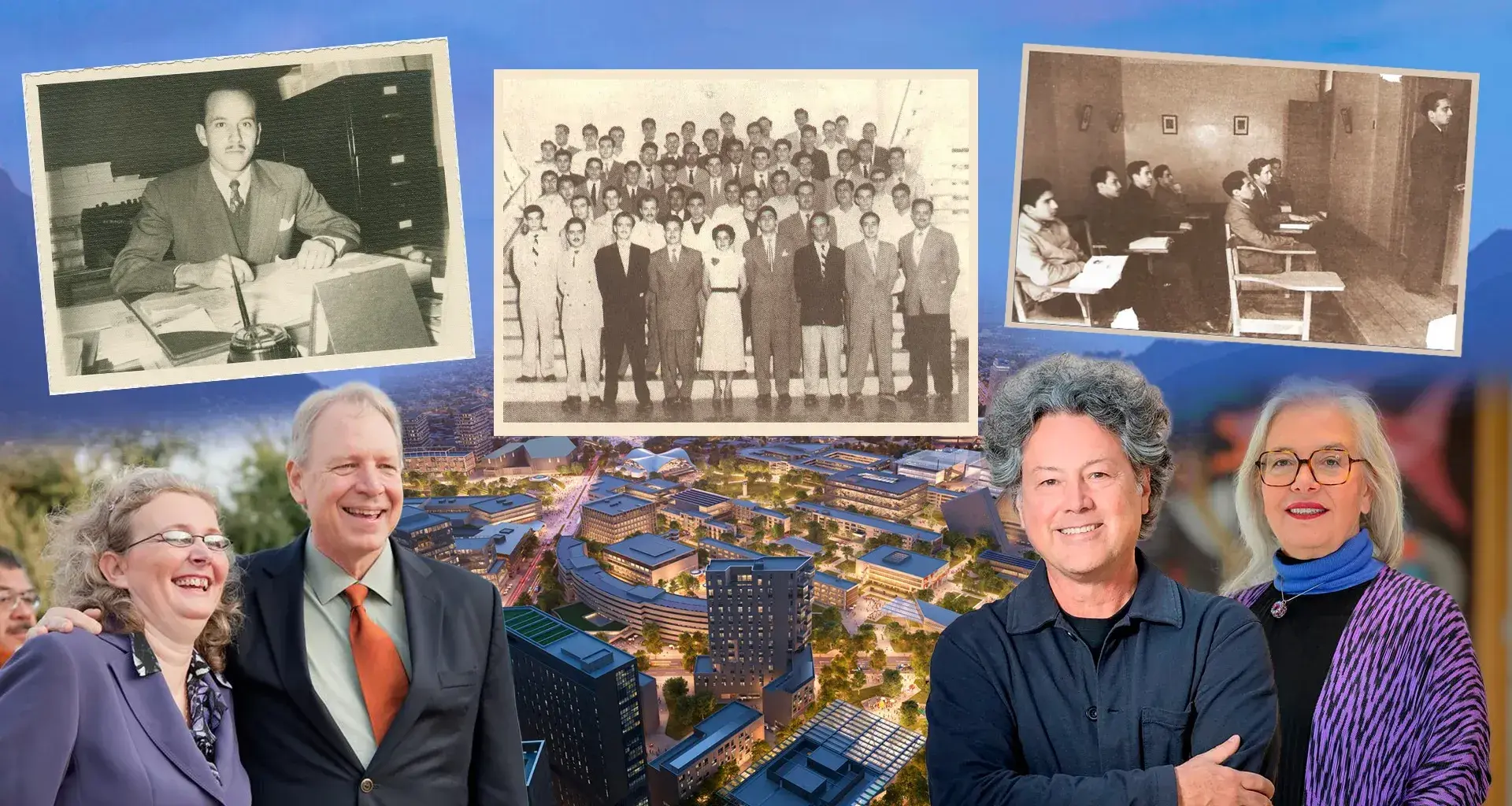

In 1946, the Tec launched a degree program that would go on to train thousands of architects who today design cities in Mexico and around the world.
In 2026, the architecture program at Tecnológico de Monterrey celebrates its 80th anniversary, having produced more than 14,000 graduates over the years, some of whom have gone on to achieve international recognition.
These include Francisco González Pulido, one of the Mexican architects with the most completed projects worldwide. Another notable figure is Angélica Treviño Baccon, a partner at the New York-based firm SHoP Architects, who has designed three buildings outside of Mexico.
In addition, Alejandro Arredondo was the only Latin American to participate in the reconstruction of Notre Dame Cathedral in Paris. Other notable alumni include Claudia Harari, who has projects in Mexico, the United States, and Saudi Arabia.
Today, alumni, administrators, and faculty alike agree that celebrating eight decades is not about nostalgically looking back, but rather about recognizing a vibrant academic institution that has had a profound impact on communities and individual lives.
- The Tec graduate community that has left its mark
- What does architecture mean at the Tec?
- A different educational approach
- A national program with local impact and global dialogue
- Architecture as a cultural, social, and technological practice
- Innovation, technology, and artificial intelligence
- A look into the future
- A collective history of the architecture program
The Tec graduate community that has left its mark
The architecture program has produced graduates who have left their mark on major projects, both in Mexico and around the world.
Tec Rector Juan Pablo Murra notes that the institution’s greatest legacy in architecture is the work of its graduates.
“We must maintain a positive outlook, acknowledging the challenges we face and recognizing that it’s up to our students to build a better future”, says the rector.
Here are some outstanding Tec graduates:
- Francisco González Pulido
As Founder of FGP Atelier, he is one of the Mexican architects with the most completed projects worldwide: a cargo drone airport in Dubai; and skyscrapers in China and Las Vegas.
In addition, he was involved in the design of Cologne/Bonn Airport in Germany and Suvarnabhumi International Airport in Bangkok, Thailand, among others.
“For me, the Tec is all about innovation, and the word I use to describe my work is ‘progress’ because it doesn’t happen overnight. It’s a process where you take small steps, and the sum of those steps brings about significant change”.
“I’m currently working in Dubai, Spain, and Asia, and the clients I’ve worked with remain my friends. In the cities where we’ve made a positive impact, we can see that our projects are still going strong”.

- Angélica Treviño Baccon
As the lead designer at ShoP Architects in New York, she has completed three buildings worldwide, with three more currently under construction.
“The training I received was comprehensive. I went to Harvard to pursue a master’s degree. As soon as I graduated, I landed a job, and with a lot of passion, have designed six buildings that took time to construct.
“Knowing how to listen, by not arriving with the answer, understanding the community, and being humble, is something that, in my opinion, has opened many international doors for me, regardless of the culture, place, or city”, she said.

- Alejandro Arredondo
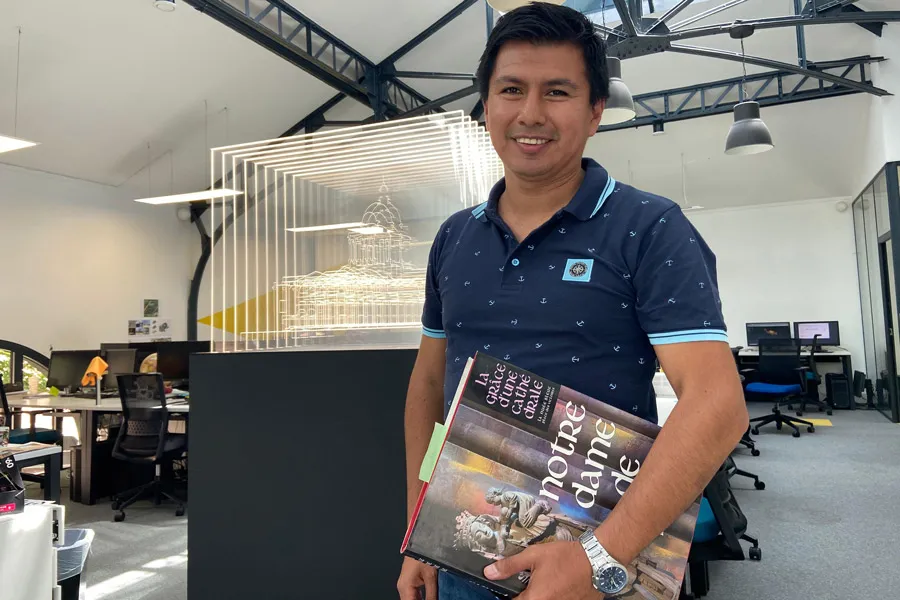
Tec graduate Alejandro Arredondo was the only Latin American to participate in the reconstruction of Notre Dame Cathedral in Paris, which was devastated by a fire in April 2019.
He remembers that his degree taught him to collaborate, to defend his ideas, but also to listen to others, and to understand that the value of a project lies not only in its form, but in the impact it has on everyday life.
- Claudia Harari
Founder and principal at Harari Landscape.
Among her most notable projects in Monterrey are the design of 50,000 square meters of green infrastructure at BBVA Stadium, as well as the revitalization of Rufino Tamayo Park and the Green Bridge, an extension of the park via a pedestrian bridge.
Harari discovered “the mother of all arts” in architecture and found the connections that led her to specialize and blaze a trail in landscape architecture.
- Lourdes Salinas
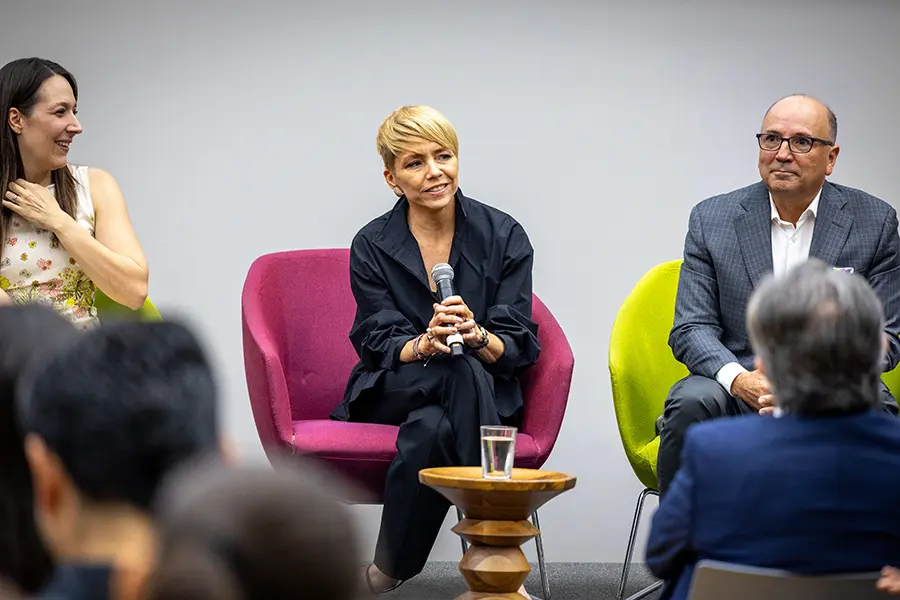
As the Founder of Three, which operates in five countries, she provides environmental consulting services specializing in sustainable design and engineering.
“My company’s purpose is my personal purpose. The key isn’t to give up when you’re driven by passion. To this day, I believe that what we do can have a positive impact on the planet”, she said.
From a young age, she understood that sustainability wasn’t just a trend but a way to promote wellbeing without harming the environment.
- Carlos Pérez Gavilán
The Director of Gensler Mexico has led projects throughout Latin America, particularly in retail and workplace sectors.
He sums it up from a different perspective: trust. The confidence with which students graduate, that “fearless” attitude to take risks.
Different careers, different graduating classes, and different contexts that share a common thread: architecture as a platform, as a network, and as a driving force. A community that extends beyond the classroom.

What does architecture mean at the Tec?
Over the past 80 years, the program has evolved to produce graduates with a global perspective, a commitment to social responsibility, and the ability to envision a better future for society, according to program administrators.
This academic initiative eventually evolved into a cultural, social, and technological practice that has been inseparable from the city and society from the very beginning.
It has also explored what it means to pursue this discipline.
For Mark Wood, Regional Dean of the EAAD in Monterrey, it is a complex convergence: “part art and part science,” the ability to understand the environment in a way that is both sensitive and critical.
Designing, says Wood, is not about imposing a form, but about interpreting what already exists: the climate, history, culture, and social dynamics.
Mariana Amatullo, National Dean of the EAAD, emphasizes its significance.
Architecture, she says, is powerful because it endures. Unlike other fields, what is designed and built does not fade away. It becomes part of the landscape, an urban landmark, a shared memory. It speaks to who we were and what we aspired to be.
For Alfredo Hidalgo, Associate Dean of Research, Graduate Studies, and Continuing Education at the EAAD, its strength lies in something even more everyday and profound: the ability to shape the space where life unfolds.
The classroom where someone discovers their calling. The square where a community gathers. The home that holds family stories, he adds.
Hidalgo points out that in the early decades, the priority was to meet the enormous demand for housing and buildings in a rapidly expanding country.
The executive said that over time, the perspective shifted. It was no longer just about building, but about understanding the city, public spaces, and the surrounding area as complex systems.
“Talking about architecture cannot be separated from talking about the city. “The way we experienced the city became a key theme for the School of Architecture”, Hidalgo said.

A different educational approach
Training architects at the Tec involves more than just mastering design techniques. “It involves training agents of change,” explains Alessandra Cirueddu, the program’s National Director.
“The goal is to train architects with a critical eye and the ability to interpret the built environment… not just focused on the architectural object itself, but on understanding the context in order to have a positive impact”, says Cirueddu.
She adds that the educational model emphasizes project-based learning: learning by doing, building with a purpose.
For example, programs such as “Ten Houses for Ten Families” have raised awareness among graduating classes about the real impact of their work.
Tec graduate Eduardo Aguilar recalls how designing and building for families in vulnerable areas changed his understanding of the profession.
“One of the greatest challenges of this profession is understanding the needs of every single person who lives in the city, and the challenge is to prioritize the common good”, he says.
Interdisciplinarity is also key, notes Dean Alfredo Hidalgo, who chose architecture because it combined law, medicine, engineering, and design into a single discipline.
That complexity remains one of its greatest attractions, he notes.

A national program with local impact and global dialogue
This national program, which has a local impact and is aligned with global agendas, is offered at 12 campuses with more than 2,362 students and ranks among the top 100 worldwide in the 2025 QS Subject rankings.
For Cirueddu, one of the most significant milestones in the program’s history has been its expansion across the country.
“Twelve campuses across the country offer the full architecture program. The school’s history has been shaped by this national presence, which goes hand in hand with a robust international dialogue”.
This expansion was a response to real needs: cities that required professionals with a strong academic background and a commitment to social responsibility, she notes.
Cirueddu adds that, at present, the architecture program at Tecnológico de Monterrey operates as a living network. Each campus engages with its local context while sharing a common vision.
Amatullo discusses this duality: academic coherence and contextual diversity.
“We train architects with a holistic vision. Sustainability, environmental and social regeneration, equity and gender perspective, and inclusion are fundamental themes in our educational model.
“These are frameworks we believe are redefining the practice of architecture today”, she explains.
Amatullo says there are projects that bridge the gap between the classroom and the city, and between theory and practice.
One example of this has been distritotec in Monterrey, which became an urban laboratory.
Another example is San Pedro de Pinta, in San Pedro Garza García, Nuevo León, which was launched by graduates of the program and demonstrated how an academic idea can transform public life.

Architecture as a cultural, social, and technological practice
“Architecture is a reflection of society. We don’t just solve spatial problems. Now we’re talking about how a building impacts the community,” says Daniel Martínez, professor and incoming Director of the EAAD, in an interview with Tec Sounds Radio.
The professor says that technology, sustainability, and ways of living have evolved alongside humanity and have become integral parts of an architect’s résumé.
Martínez says it is no longer enough to simply solve spatial problems. We must ask ourselves how each building affects the community.
"The way we experienced the city became a key theme for the School of Architecture”.- Alfredo Hidalgo
For DeanAmatullo, this evolution has involved thinking about architecture “beyond the technical aspects… as a social, environmental, cultural, and political system.”
In this context, Amatullo argues that knowledge is neither neutral nor universal: it is situated. Each campus interprets its context and adapts to and understands its surroundings.
Innovation, technology, and artificial intelligence
From the first computer labs in 1980 to today’s integration of artificial intelligence, technology has been a constant ally, but never the end goal, Hidalgo notes.
“Tools alone don’t make for better architecture. What’s truly essential and valuable is still how we perceive elements such as light, space, temperature, humidity, and air”, he adds.
For Wood, the goal is for students to become familiar with these tools, use them, but also examine them from an ethical and critical perspective.
“The goal isn’t to replace humans, but to empower them. Getting things done faster without losing the human touch”, he says.
Diana Urías, the EAAD’s Northwest Regional Dean, notes that “architects preserve the record of history. Everything we design or build reflects a social and economic context”.
For example, she remembers that 30 years ago, no one was talking about sustainability, inclusion, or equity. Today, they are cross-cutting themes.
A look into the future
The deans agree that unchecked urban growth, the climate crisis, and digital transformation are the major challenges, and therefore architecture has a responsibility to humanize cities and prioritize the common good.
Amatullo invites us to ask ourselves what kind of architects we aim to train and what kind of futures we are building.
“What should endure in what we design or build? How are we working to build a more dignified future? We can accomplish more by working together within the discipline, drawing on the strength of our faculty”, she says.

According to faculty and administrators, eight decades after starting in that grand house in downtown Monterrey, the architecture program at Tecnológico de Monterrey is not just an academic program, it is a community that thinks, questions, and builds.
They say it is both memory and the future. It is a process and it is permanence. It is both art and science. It is about ethics and creativity.
Celebrating 80 years means embarking on a new chapter with the conviction that architecture—when practiced with responsibility, sensitivity, and vision—can be one of the most powerful forces for change, they note.
In the end, as those who live and teach it point out, architecture is not just about buildings. It’s about the space where yesterday, today, and tomorrow come together.
It is not a static story, but an ongoing conversation that brings generations together.
A collective history of the architecture program
When Tecnológico de Monterrey was founded in 1943, Monterrey was a city with a population of approximately 250,000.
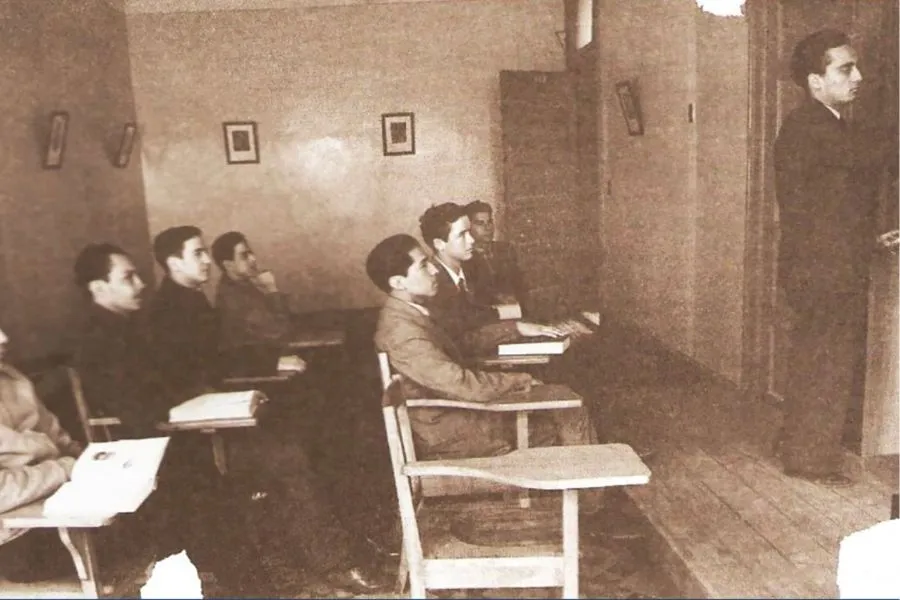
Three years later, in 1946, the architecture program began at the historic mansion in downtown Monterrey, with architect Ricardo Guajardo serving as the program’s first Director and founding professor.

In 1950, the first class of architects graduated.
In 1959, Marta Soledad Montes de la Garza graduated, becoming the first woman to complete the program.

- The 1970s and 1980s
In 1978, the first feminine title was introduced, with the word Arquitecta.
In the 1980s, in response to technological innovation and the evolution of the profession, the facilities were upgraded with computer labs and specialized drawing and design software.
In 1985, a series of national architecture symposiums began, featuring distinguished international architects such as Charles Moore, Pedro Ramírez Vázquez, Richard Rogers, Toyo Ito, and Peter Eisenman.

- The 1990s
During the 1990s, entrepreneurship and innovation were integrated into the academic curriculum, beginning in 1995 with the flagship courses of the entrepreneurship program.
In addition, in 1999, key initiatives were launched to support student training, such as the Special Design Group, which opened up opportunities for professional internships at prestigious, top-tier international firms like Renzo Piano.
- The 2000s
In 2000, the Luis Barragán Chair was inaugurated, with the participation of architect Ricardo Legorreta.
In 2004, the school launched its first graduate program, the Master’s in Sustainable Design and Development.

- 2010-2020
Academic development continued in 2010 with the establishment of the National School of Architecture, Art, and Design (EAAD) on the Monterrey campus, with Dr. James Mayux serving as its first Director.
In 2014, the Monterrey campus launched distritotec, an urban regeneration plan that serves as a hands-on laboratory for architecture students, who participate in the development of urban planning projects.
In 2016, the National School of Architecture, Art, and Design was established, led by Dr. Roberto Íñiguez, who served as its first National Dean.

- 2021–present
In 2021, the program made its debut at the Venice Biennale, the world’s most important international forum for architecture.
At the same time, the Faculty of Excellence Program was launched, aimed at recruiting internationally renowned professors, bringing in Colombian architect Alejandro Echeverri and Xaida Muxí.
In 2022, the academic program began with the launch of the Master’s in Architecture and Urban Design. In 2025, the EAAD celebrated the relaunch of the Luis Barragán Chair, with architects Jean-Pierre Cruz and Sandra Barclay as guests.

SEE ALSO:
Seleccionar notas relacionadas automáticamente
1
Category:
Related stories


