
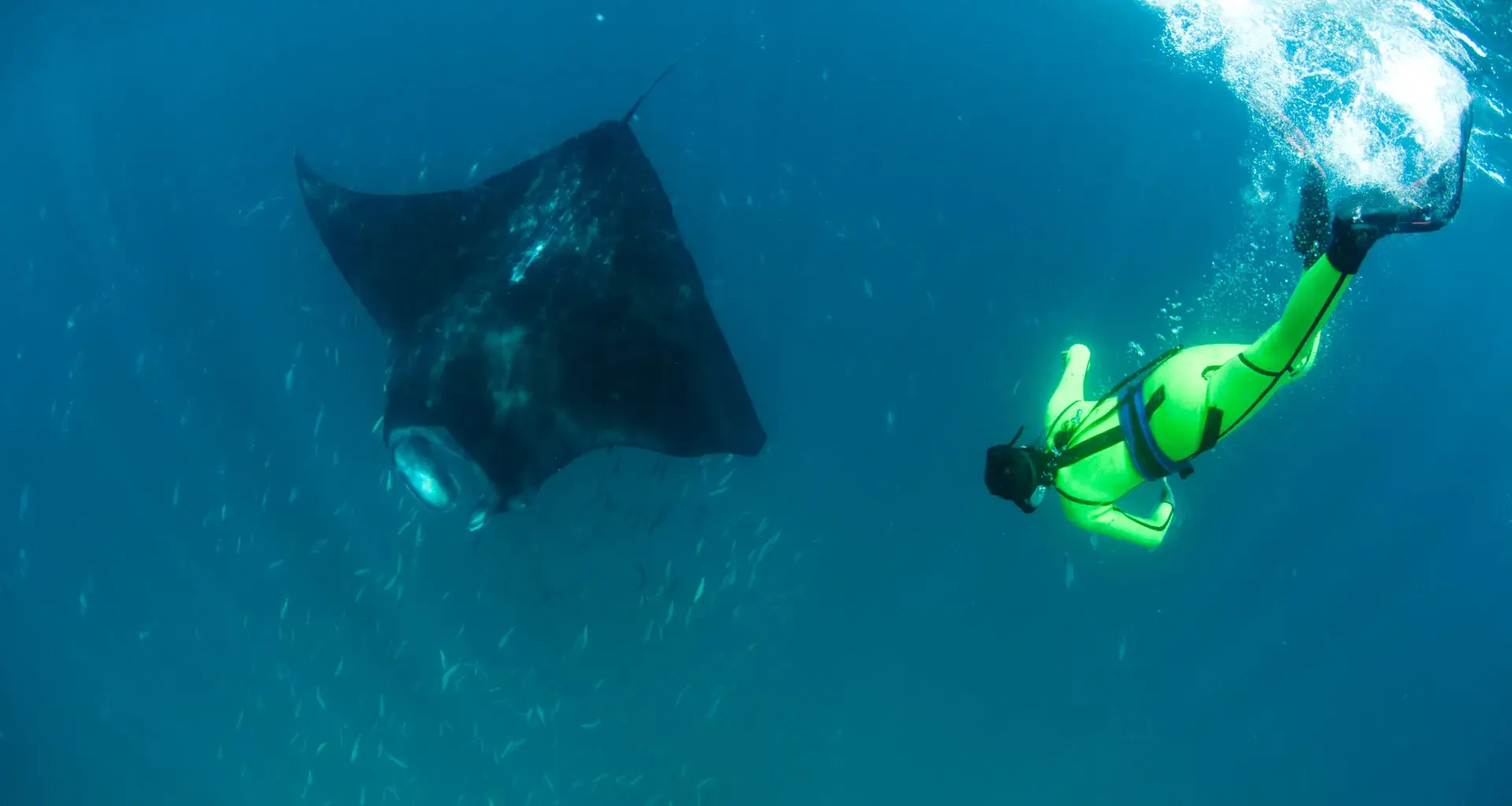

The discovery of a third species of manta ray was confirmed through DNA analysis conducted by the CoreLab at EXPEDITION FEMSA.
After more than a decade of research, Tec de Monterrey researcher Silvia Hinojosa and her team have confirmed the discovery of a third species of giant manta ray.
This led to its selection as one of the Top Ten Marine Species of 2025 from the World Register of Marine Species (WoRMS).
Silvia Hinojosa is the bioinformatics coordinator of the Genomics CoreLab at EXPEDITION FEMSA, where she conducted DNA sequencing to confirm the existence of this third species, known as Mobula Yarae.
Thanks to the analysis of 13 genes from the complete mitochondrial genome, it was possible to determine the identity of the new species with greater precision.
“More than ten years ago, while I was pursuing my doctorate, I was working in the Yucatán Peninsula and realized that the giant manta rays in the region didn’t quite fit the two species recognized at the time”, she said.
In 2009, marine biologist Andrea Marshall demonstrated the existence of two species: Mobula Birostris and Mobula Alfredi; that same study also suggested the possibility of a third species, named Mobula Yarae.
Years later, while conducting fieldwork on the Yucatán Peninsula, Silvia Hinojosa noticed some inconsistencies in the seaweed beds she observed in areas such as Holbox and Isla Contoy.
“While I was in this research area in Yucatán, I realized that the manta ray I was looking at didn’t match the two that already existed”.
“We sequenced the genes of the other species along with those of the species we were studying to see if there were any genetic differences”, she said.

“I collected the samples underwater using a device similar to a modified harpoon that extracts a small tissue sample".
Utilizing second-generation genetic sequencing technology, large volumes of genetic data could be analyzed more quickly and accurately.
“This confirmation was very important because, from a conservation standpoint, only the two existing species had been included on the list”, she said.
Every year, WoRMS publishes its list of the Top Ten Marine Species, an international selection highlighting the most significant marine species recently discovered.
Conducting joint research
The analysis was conducted in collaboration with Nayara Bucair, a doctoral student at the University of São Paulo (Brazil), who contacted Hinojosa after learning about her research on the manta ray.
The DNA collection process involved obtaining samples via minimally invasive biopsies.
“I collected the samples underwater using a device similar to a modified harpoon that extracts a small piece of tissue, comparable to a slight scrape.
“We immediately submerged them in liquid nitrogen to preserve them, then extracted the DNA in the lab and proceeded to sequence it”, she said.
However, the recognition of the new species ran into a major obstacle, as a reference specimen was needed for its official validation.
The Brazilian researcher played a key role in this process, as she found a specimen that was intact enough at a market, which provided the evidence needed to continue the research.
Finding physiological differences
Silvia Hinojosa said that, from a morphological standpoint, the differences between the species are very subtle.
“These specimens are about 5 meters long; the first species discovered are characterized by a black mouth, a protrusion at the base of the tail, and spots on the belly”, she said.
Although the newly confirmed species exhibits most of the characteristics described above, it differs in that it has spots on the upper part of its fins.
“The spots are like the manta ray’s fingerprints; each one has a unique pattern, allowing us to identify the third species based on observation”, she said.

“We sequenced the genes of the other species along with those of the species we were studying to see if there were any genetic differences".
About WoRMS
The World Register of Marine Species (WoRMS) is one of the world’s most important scientific databases for the recording and classification of marine life.
“I’m proud that the team leading this research was made up mostly of Latin American researchers”, she added.
This list is published in observance of Taxonomists’ Appreciation Day, to highlight the work of the global scientific community and emphasize the importance of continuing to document ocean biodiversity.
READ MORE:
Seleccionar notas relacionadas automáticamente
1
Category:
Related stories


